
'...you evaluate three key factors before committing your money.'

India has reduced the time period for foreign investors to seek international arbitration from five years to three years as part of the recently signed investment pact with the United Arab Emirates (UAE), a departure from its model Bilateral Investment Treaty (BIT). Under the Investor-State Dispute Settlement (ISDS) mechanism, if the Indian judicial system is unable to resolve a dispute within this shortened period, investors can resort to international arbitration. The investment pact, signed on February 13 in Abu Dhabi, came into force on August 31, replacing the previous pact.

Billionaire Mukesh Ambani-led Reliance Industries has completed the merger of its media assets with the India business of global media house Walt Disney and formed a joint venture with a valuation of over Rs 70,000 crore. The JV will be one of the largest media and entertainment companies in India with a combined revenue of approximately Rs 26,000 crore and will be led by Nita Ambani as its chairperson, according to a joint statement.

Although the company has shown willingness to talk to its workers and accept their key demands, it is CITU that is causing a roadblock to a solution.

Taiwan is keen to collaborate with India and help it become a leader in the semiconductor space, Jason Ho, chairman of the Taiwan Chamber of Commerce in India, said, asserting that the Taiwanese companies have the supply chain for things that the Indian market needs. Manufacturing semiconductors - used in electric and hybrid cars, drones, and communication devices - is fairly complicated, entails huge investment, and can be a cumbersome process.
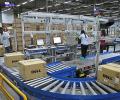
A task force set up by the Ministry of Electronics and Information Technology (Meity) for transforming India into an "electronic and semiconductor products" nation is on the verge of finalising its report, which is likely to recommend an allocation of Rs 44,000 crore between 2024 and 2030 to support homegrown companies in their quest to develop products and build global brands. The task force's recommendations include significant incentives: Rs 15,000 crore dedicated to electronic products (systems), Rs 11,000 crore for semiconductor products, and Rs 18,000 crore for various other incentives such as talent development, common infrastructure, logistics, and technology & IP (intellectual property) acquisition, a member of the panel revealed.

Kurumbur in gold-loving Tamil Nadu was once a thriving centre for goldsmiths. Today their number is down to two.

Apparel exports to Japan are expected to grow by 20-25 per cent year on year from the current $220 million on account of rising opportunities for domestic exports, AEPC said on Saturday. Apparel Export Promotion Council (AEPC) said that rising opportunities due to changing geopolitical landscape, government supports like production linked incentive, mega park scheme, improving the quality standard, getting sustainable and utilising benefits of free trade agreements with major markets are the key growth drivers. To promote exports to Japan, the council is organising a two-day show in Gurugram.

'Additionally, the significant employment multiplier will boost direct and indirect jobs of up to 1.1 million.'

'Traders must adopt digital payments as soon as possible within a set timeframe, as the nation is moving rapidly towards digitisation.' 'Ignoring digital systems is not an option for strengthening trade.'

New investors should gradually build a 5 to 10 per cent allocation to gold.

The proposed India-Israel trade pact should be beneficial to both nations and until New Delhi gets a good deal, it would not do an agreement, Commerce and Industry Minister Piyush Goyal said. India and Israel are negotiating a free trade agreement (FTA) since May 2010. "With Israel, until we get a good deal, we will not do an FTA. It has to be reciprocally beneficial," the minister said in San Francisco on Tuesday while interacting with the Indian community.

A group comprising top tech startups and unicorns has raised several "serious concerns" over a platform-based gig workers Bill proposed by the Karnataka government, saying it would hurt the ease of doing business. They told the state government the Bill in its current form would hamper operations and increase regulatory and compliance burden on the nascent gig and startup economy, according to sources.

As stringent sanctions imposed by the European Union and US are crippling business and trade, desperate Russian oil companies are offering huge discounts to India, provided a payment mechanism to bypass the SWIFT ban is quickly approved by the government. According to sources familiar with the development, Russian oil firms are offering 25-27 per cent discount to the dated Brent crude prices. State-run Rosneft is one the biggest oil companies that supply crude to India.

'If you wish to expand your business in a competitive global environment, you have no option but to be ethical.'

Corporate India is more dependent than before on exporters of IT services such as Tata Consultancy Services (TCS), Infosys, and Wipro for earning foreign exchange. Such companies account for nearly 43 per cent of the forex revenues of listed firms, up from 22 per cent a decade ago. The listed IT services companies earned nearly Rs 4.2 trillion through exports in FY22, up 15 per cent from the Rs 3.65 trillion a year earlier. In comparison, the forex revenues or exports of the rest of the BSE500 companies were down 11.9 per cent to Rs 5.6 trillion last financial year.

The Enforcement Directorate's (ED's) chargesheet in the National Stock Exchange (NSE) illegal phone-tapping case points to insider trading during the tenures of Chitra Ramkrishna and Ravi Narain as managing director and chief executive officer of the bourse. The federal agency will soon be sharing the details with the Securities and Exchange Board of India (SEBI) for further inquiry, two people aware of the findings told Business Standard. The ED, which filed its prosecution complaint (commonly known as chargesheet), alleged that Narain and Ramkrishna were the "key conspirators" and had assisted iSec Services to generate money to the tune of Rs 24 crore for exchanging crucial information, the people said.

The government is formulating guidelines on the use of ethylene oxide (ETO) in samples of spices for the domestic market and exports, people aware of the matter said, as it plans to step up efforts to make quality checks more stringent. ETO, a flammable, colourless gas, is typically used as a disinfectant. It is also used as a sterilising agent and an insecticide to reduce microbial contamination in spices. However, its use is considered carcinogenic, beyond permissible limits.

'As far as skilled immigration is concerned, the US needs Indian skills and Indian talent, and there are no two opinions about it even among US companies.'

'We can hope to see a lot of creation of jobs in the days to come.'

The government is expediting visa-related issues to bring technicians to India from any country, not just China, as and when required, to ensure the smooth implementation of the flagship production-linked incentive (PLI) scheme aimed at boosting domestic manufacturing. "If those under the PLI scheme need to get their equipment installed, we try to expedite the ability to get technicians into India from any country, whichever it may be," Union Commerce and Industry Minister Piyush Goyal told Business Standard in an interview.

'Within India, people want high-quality, personalised banking services, and the demand for such services has exploded.'

'Spending by the middle class is limited with a focus on savings. However, there is buoyancy at the top-end.'

WazirX lost about 45 per cent of its crypto assets to the security breach. People privy to the discussions say North Korea has been mentioned.

In the Union Budget for Financial Year 2023-24 (FY24), Finance Minister Nirmala Sitharaman had held forth on the need for better governance and investor protection in the banking sector. She had proposed certain amendments to the Reserve Bank of India Act (RBI Act), 1934; the Banking Regulation Act (BR Act), 1949; and the Banking Companies (Acquisition and Transfer of Undertakings) Act, 1970.

India is planning to soon sign new and updated mineral pacts with about a dozen countries in Africa. The Ministry of Mines is in discussions with Cte d'Ivoire, Democratic Republic of the Congo (DRC), Madagascar, Malawi, Mali, Morocco, Mozambique, South Africa, Tanzania, Zambia and Zimbabwe, Business Standard has learnt. Negotiations are ongoing with around a dozen countries, and more will be added to the list soon.

However, the government's draft policy on e-commerce companies has forced consumer companies to also adapt to the changes. For Dabur India, e-commerce channel continues to be a key driver of growth in urban India. The contribution of online sales to its entire portfolio is at six per cent compared to 1.5 per cent before the pandemic.

Indian kiranas are agile enough to face the q-com challenge, but it's going to be a tough fight, notes Ambi Parameswaran.

The government-backed Open Network for Digital Commerce (ONDC) is likely to start levying user charges in the current financial year.

The government is planning to tweak its procurement policy to give a fillip to domestic manufacturing. The industry department has floated a proposal to raise the minimum local content requirement for public procurement for Class-I and -II suppliers from 50 per cent currently to 70 per cent, and 20 per cent as of now to 50 per cent, respectively.

'The race is now on for Indian IT firms to develop their AI prowess and focus on a software-first approach to services as the people element becomes more complicated with Trump's expected new regulations.'

According to CITU, around 90% of the 1,723 workers of the Sriperumbudur plant are participating in the strike. Samsung said it is ready to talk to employees and not a third party like CITU.

The court said a social media influencer is expected not to try to play the role of a professional without any backing to substantiate what is being shared by them.
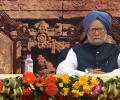
'He will be remembered more for what he did as finance minister -- as someone who functioned well when the political fallout was taken care of.'

When Biocon chairperson Kiran Majumdar-Shaw - well known for raising issues ranging from lack of civic services in Bengaluru to climate change - decided to take on the Indian stock market regulator, the Securities and Exchange Board of India (Sebi), she forced the Indian corporate world and legal community to take notice. In an interview to Business Standard, Majumdar-Shaw called a Sebi order to impose a fine on insider trading charges against a Biocon employee and an external consultant an "Agatha Christie" fiction, which destroyed the reputation of "innocent people". "The order is pure harassment and has caused huge reputational damage to us and goes against the principles of good governance promised by this government," Mazumdar-Shaw said. "We will certainly appeal this," she added.

To boost domestic manufacturing under the Make in India initiative and reduce dependency on imports, the government is expected to announce in the Budget an increase in the minimum local content requirement for public procurement, with certain sectors being granted exceptions. Currently, firms producing goods, services, or works with at least 50 per cent local content are classified as Class-I local suppliers and are preferred the most in government procurement.

'If their allocation to certain segments have become high due to strong returns over the past three-four years, they should rebalance their portfolios and bring them in line with their long-term asset allocation.'

Russian oil supplies to India will continue to flow unhindered and suppliers will come up with ways to sidestep secondary sanctions, a Russian official told Business Standard.

'In the short term you keep your return expectations very, very low; in the medium term be prepared to invest and in the long term growth will come and your returns from stocks will be high.'

'Although currently, urban areas contribute more to growth than rural, there is no reason why rural areas should not contribute.'
